


September 16, 2026

September 18, 2025
September 10, 2025
July 3, 2025
What the Government Says India Earned From Mobile Phone Incentives

Author
Shoonya Team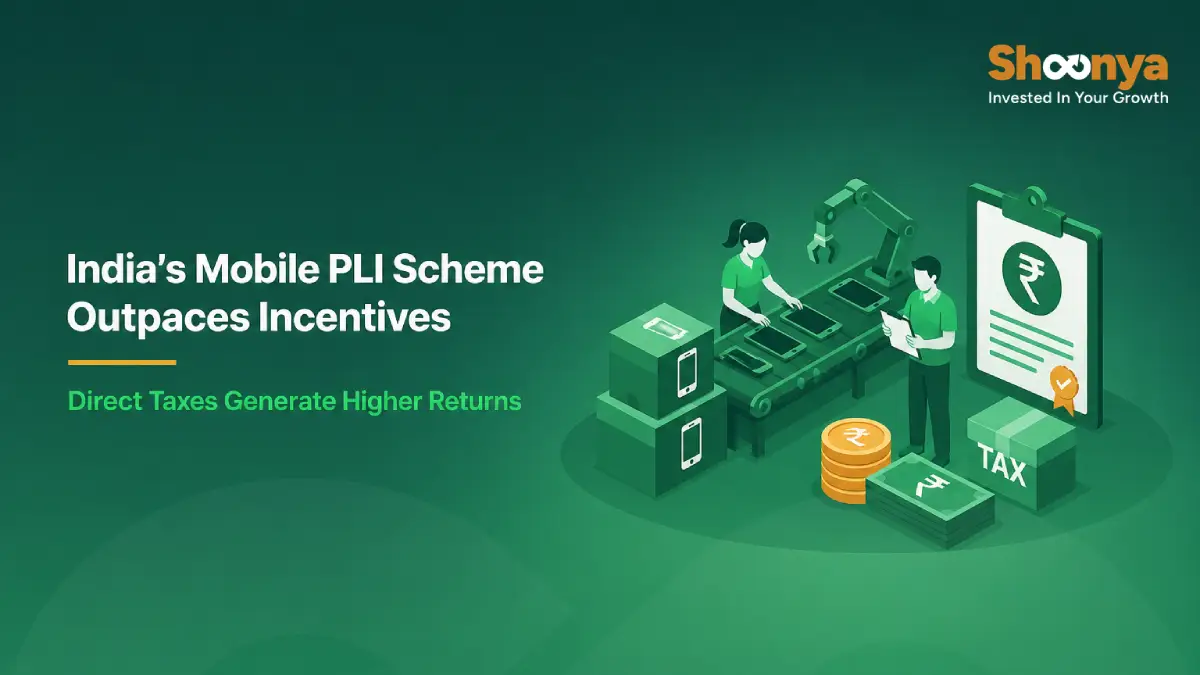
On Wednesday, Union IT Minister Ashwini Vaishnaw responded on X to criticism of India’s mobile manufacturing model and the use of government incentives in the sector. He said the mobile production-linked incentive (PLI) scheme has brought in more direct tax than the government paid out in incentives. He also pointed to job creation as a key result.
How Do Tax Collections Compare With Incentive Payouts?
| Metric | Figure |
|---|---|
| Incentives paid | ₹19,000 crore |
| Direct tax collections | ₹25,000 crore |
| GST collections | ₹3,000 crore |
How Many Jobs Has Phone Assembly Created?
According to the minister, electronics manufacturing employs 25 lakh people in India. Mobile phone production accounts for 12 lakh of these jobs, making it the largest source of employment within the wider electronics sector.
What Does the ₹62,500 Crore MPMS Aim to Achieve?
The Union Cabinet approved the Mobile Phone Manufacturing Scheme (MPMS) in July. It will run from FY27 to FY31. According to the Ministry of Electronics and Information Technology, its goals are to:
- Increase mobile phone production
- Raise domestic value addition
- Strengthen supply chains
- Improve global competitiveness
- Support Indian brands through incentives linked to design and R&D
How Are MPMS Incentives Structured?
| Component | Detail |
|---|---|
| Base incentive | 2.25% to 5% on eligible mobile phone sales |
| Additional incentive | Up to 1.5%, linked to domestic sourcing of key components and sub-assemblies |
| Expected cumulative production | About ₹39 lakh crore |
| Expected direct jobs | Around 60,000 |
How Is MPMS Different From the Earlier Electronics PLI?
The PLI Scheme for large-scale electronics manufacturing ended on March 31, 2026. MPMS keeps government support for phone manufacturing going, but its focus is different:
- More attention to local sourcing of components, not only final assembly
- Development of a domestic component ecosystem
- Support for brands owned by Indian companies
- Building design and R&D capabilities within India
Final Outlook
The extra incentive tied to sourcing will be the main measure of whether MPMS increases domestic value addition beyond what the earlier scheme achieved. Production during the scheme period will show how close output gets to the ministry’s estimate. Growth in Indian brands and component suppliers will show how far supply chains are being built locally.


Explore Our Offerings

Stocks
Trade equities across NSE and BSE with zero delivery charges. Invest, hold or sell with a seamless experience.


Future & Options
Execute complex strategies with simple tools and real-time data.

IPOs
Apply to the latest IPOs in just a few taps. Stay updated and capture opportunities as they open.