



November 23, 2026

September 16, 2026
September 18, 2025
September 10, 2025
Bonds Now Available on Shoonya: Find Your Kind of Bond

Author
Shoonya Team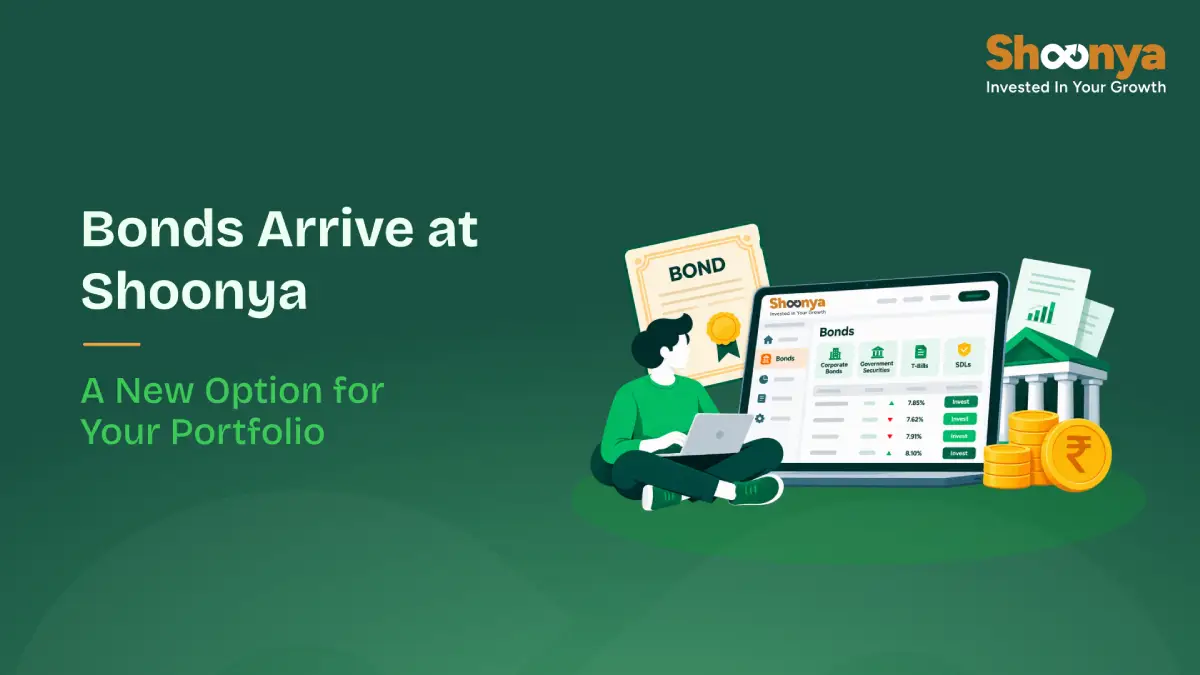
Your investments may serve different purposes. Some support long-term goals. Others need to provide periodic income or align with a planned expense. Choosing an option starts with knowing what you need.
Bonds offer defined payment and repayment terms that you can assess against those needs. Shoonya is introducing bonds as another option for your portfolio.
This blog explains how bonds work, what to compare and which risks deserve your attention.
What Are Bonds?
Bonds are debt securities that companies issue to borrow money from investors. The issuer agrees to make payments and repay the principal according to the bond’s terms.
Buying a bond makes you a lender to the company. Buying its shares makes you a part-owner. Your bond payments depend on the issue terms and the company’s ability to meet them.
How Do Bonds Work?
You buy a bond, receive payments on schedule, and hold it until maturity or sell it earlier if a buyer is available.
- A company issues bonds to raise funds.
- You purchase the bond at the applicable price.
- The company is due to make interest and any principal instalments as scheduled.
- At maturity, any remaining redemption amount becomes due.
For example, a hypothetical fixed-rate bond with a ₹10,000 face value and an 8% annual coupon has scheduled annual interest of ₹800. A quarterly schedule would divide that into 4 payments of ₹200, before tax, assuming no principal reduction during the year and all payments are made.
What Should You Compare Before Choosing a Bond?
Compare the issuer, yield, credit rating, maturity and payment schedule together. Each tells you something different about the investment.
| Detail | What it helps you understand |
|---|---|
| Issuer | Who is borrowing your money and their ability to repay |
| Coupon rate | The interest payable on the bond’s face value |
| Yield to maturity (YTM) | The estimated annualised yield at the purchase price if held to maturity |
| Credit rating | A rating agency’s assessment of repayment risk |
| Remaining maturity | How long until the final scheduled repayment |
| Payment schedule | When interest and principal payments are due |
| Security | Whether specified assets back the bond |
Coupon rate and YTM are different. YTM considers the purchase price, payment timings and redemption value. It assumes full scheduled payments and reinvestment of coupons at that yield; it does not promise the outcome.
Why Consider Bonds Alongside Your Other Investments?
Bonds can add fixed-income exposure and scheduled cash flows to a portfolio. Their usefulness depends on your goals and the risks of the selected issuer.
- Income planning: Coupon-paying bonds have payment schedules you can compare with your income needs.
- Investment timelines: A maturity date helps you assess when the final payment is due.
- Diversification: Bonds add a different investment type alongside equity and other assets. Holding several bonds from one issuer still concentrates repayment risk.
How Can You Start Exploring Bonds Through Shoonya?
Start with Shoonya’s Bonds offering and follow the investment journey provided for the selected bond.
- Review the available options:Examine the issuer, rating, yield and remaining maturity.
- Read the documents:Check payment schedules, security details and any early-redemption conditions.
- Complete the required verification:Follow the account, KYC and demat requirements shown.
- Check the final amount:Review the purchase price, accrued interest where applicable, charges and settlement date.
- Complete the purchase:Follow the payment instructions and retain the transaction confirmation.
Minimum investment, eligibility and charges depend on the offering. Review the applicable details rather than assuming all bonds follow the same conditions.
What Risks Should You Understand Before Investing?
Bonds carry repayment and market risks. A defined payment schedule does not ensure that the money will arrive on time.
- Credit risk: The issuer may delay or fail to pay interest or principal.
- Liquidity risk: A buyer may not be available when you want to sell.
- Interest-rate risk: Changes in market rates can affect the price of fixed-rate bonds.
- Recovery risk: Security backing a bond does not ensure full or prompt recovery after default.
An early sale may produce a different return from the YTM shown at purchase. Money required at short notice should not depend on an assumed immediate exit.
Interest from ordinary taxable bonds is generally taxable. Selling can also create capital gains or losses, and applicable TDS and charges affect the amount received.
How Are Bonds Different from Bank FDs?
Bonds are company-issued securities, while bank FDs are deposits. Their pricing, exit process and risk framework differ.
| Factor | Bonds | Bank FDs |
|---|---|---|
| Where the money goes | To the issuing company through a debt security | To the bank as a deposit |
| Return comparison | Coupon and YTM depend on bond terms and purchase price | Interest follows the booked deposit terms |
| Early exit | Listed bonds need a buyer at an available market price | Withdrawal follows the bank’s rules and any penalty |
| Value before maturity | Market price can rise or fall | Generally not priced in a secondary market |
Find a Bond That Fits Your Plans
Looking for periodic income or investing towards a future expense? Explore bonds on Shoonya and compare yields, credit ratings and payout schedules before you invest.
View Available Bonds!Shoonya Bonds: FAQ’s
Does a bond payout always mean interest income?
No, some payouts include repayment of your own principal. Check the cash-flow breakdown to distinguish interest income from returned capital.
Can the issuer repay a bond before maturity?
Some bonds have a call option allowing early redemption under specified conditions. Check the issue terms, as early repayment can affect your expected income and reinvestment plans.
Can a bond’s credit rating change after purchase?
Yes, agencies can upgrade or downgrade ratings as the issuer’s financial position or outlook changes. Review subsequent rating updates while you hold the bond.


Explore Our Offerings

Stocks
Trade equities across NSE and BSE with zero delivery charges. Invest, hold or sell with a seamless experience.


Future & Options
Execute complex strategies with simple tools and real-time data.

IPOs
Apply to the latest IPOs in just a few taps. Stay updated and capture opportunities as they open.