


September 16, 2026

September 18, 2025
September 10, 2025
July 3, 2025
What Sitharaman Said About Government Spending and India’s Growth

Author
Shoonya Team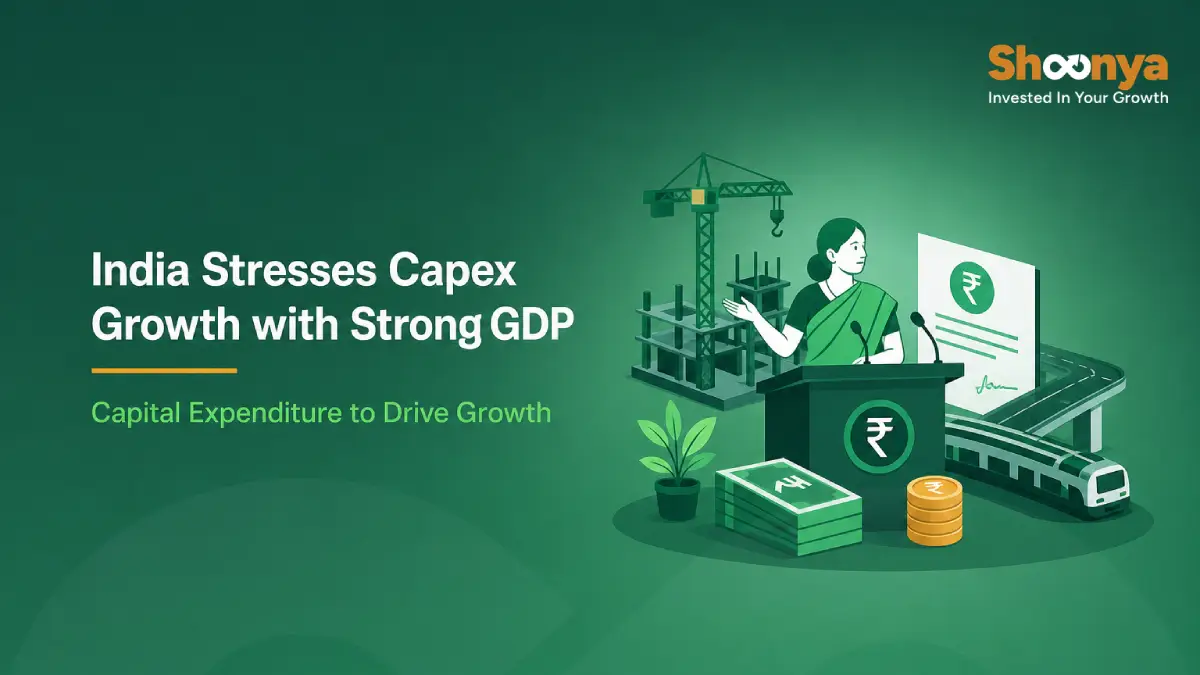
Finance Minister Nirmala Sitharaman spoke in a fireside chat with HSBC India Chief Executive Hitendra Dave. She said capital expenditure will remain a key part of the Centre’s growth approach. She added that it will continue within the limits of fiscal discipline.
Why Does Public Investment Remain Part of the Growth Plan?
Sitharaman called capex a very important part of India’s growth strategy. Her main points were:
- Public investment can encourage private companies to expand capacity
- Government spending is meant to bring in private investment, not replace it
- The approach has delivered strong results over the last 4 to 5 years
- The multiplier effect of government investment has grown over time
How Does the Centre Balance Spending With Fiscal Discipline?
Some argue that fast-growing economies should spend more aggressively and pay less attention to fiscal metrics or sovereign credit ratings. Sitharaman said an economy like India’s needs spending, but it must be done responsibly. She said the government must track fiscal intensity and stay prudent, rather than treat growth spending and fiscal discipline as separate goals.
Which Economic Indicators Did She Point To?
The minister said the Indian economy shows no fragility, citing the banking system and tax revenue.
“There is no fragility. Banks are fine, the economy is robust.”
— Nirmala Sitharaman, Finance Minister| Indicator | Figure | Context |
|---|---|---|
| GDP growth | 7.8% | Achieved despite geopolitical conflicts, high interest rates and trade tensions |
| October GST collections | ₹2.3 lakh crore | Up 23% year on year |
| GST record | Second highest monthly total on record | Fastest growth since the tax overhaul a year ago |
Banks Have Recovered, but Sitharaman Flags Future Readiness
On the financial sector, Sitharaman said banks have successfully overcome the stress seen during the 2013-15 period. She did not describe the sector as risk-free, but said banks must remain ready for future global challenges.
That message fits with the wider tone of her remarks: growth through investment, but with caution on fiscal and financial stability. For retail market participants, the key policy signal is that India’s capex growth strategy remains tied to both public investment and fiscal restraint.
Final Outlook
The minister’s remarks suggest that upcoming budget decisions will continue to support capex while keeping the deficit in check. Private capacity expansion in the coming quarters will show whether the larger multiplier she described is bringing in more corporate investment. With global conditions uncertain, how well banks can withstand outside shocks remains an important area to watch.


Explore Our Offerings

Stocks
Trade equities across NSE and BSE with zero delivery charges. Invest, hold or sell with a seamless experience.


Future & Options
Execute complex strategies with simple tools and real-time data.

IPOs
Apply to the latest IPOs in just a few taps. Stay updated and capture opportunities as they open.